Vinci, Tuscany: simple living & Leonardo’s legacy · Vinci, Toscana: vita semplice e l’eredità di Leonardo
The Living Garden
“A community is the mental and spiritual condition of knowing that the place is shared…” — Wendell Berry
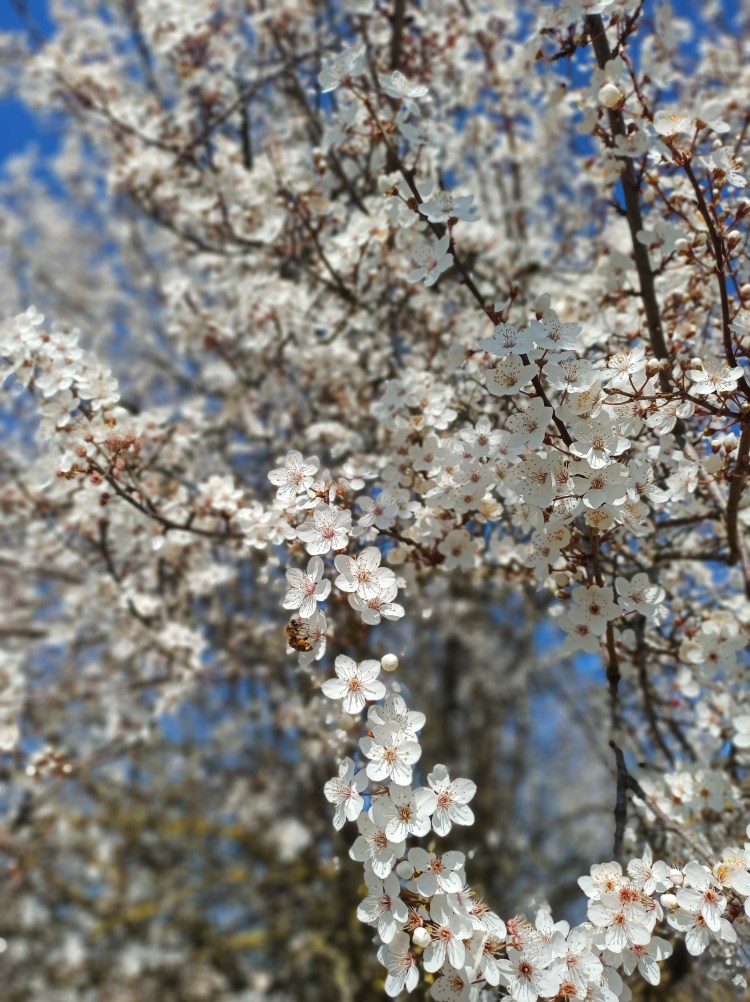
Spring blossoms opening in the garden at Genevieve Grove, where pollinators and flowering trees mark the return of the growing season.
By returning our lives to real places, we rediscover what community truly means.
At Genevieve Grove, the garden is not only a place where vegetables grow. It is a small living ecosystem where soil, plants, animals, and people share the same ground.
Chickens move slowly through the grass. Ducks wander between beds and water bowls. Dogs rest in the shade or follow quietly along the paths.
Each life here shapes the others.
The garden reminds us that land is never occupied by one species alone. It is always a shared field of presence, movement, and responsibility.
Living With the Land
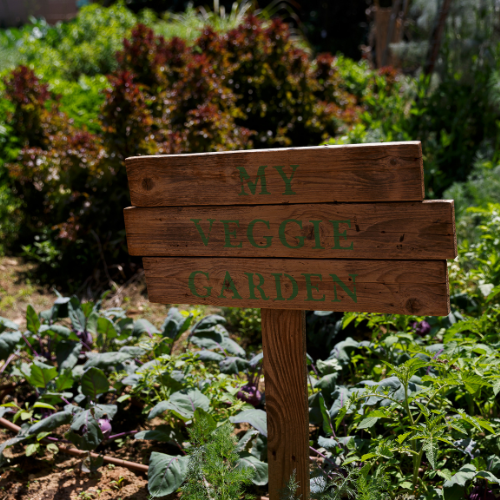
A small sign marking the vegetable garden at Genevieve Grove, where food is grown slowly and close to the land.
When life is rooted in soil, weather, and daily care, the effects of our actions become visible.
What we plant. How we tend. What we take, and what we return.
Everything leaves a trace in the living fabric of the place.
Food grows here, but so does relationship: between plants and soil, animals and insects, water and roots, humans and the rhythms that sustain them.
The chickens scratch the earth and help keep insects in balance. Ducks wander through the garden edges. Organic matter returns to the soil through compost and natural decay.
Nothing stands alone. Each part supports another.
The aim is not control, but coexistence.
A Garden That Listens
The garden follows the simple practice of observation before intervention.
New growth emerging in the vegetable garden at Genevieve Grove, shaped by soil, light, and time.
Beds are placed where light falls naturally. Water is guided gently through the land. Plants that thrive are welcomed; those that struggle teach us something about the soil.
Season by season, the garden adjusts itself.
Leaves fall and return to the ground. Straw protects the soil. Kitchen scraps become nourishment again.
Growth is never forced. It is accompanied.
The work here is slow, patient, and attentive — a long conversation with the land rather than a project imposed upon it.
Shared Ground
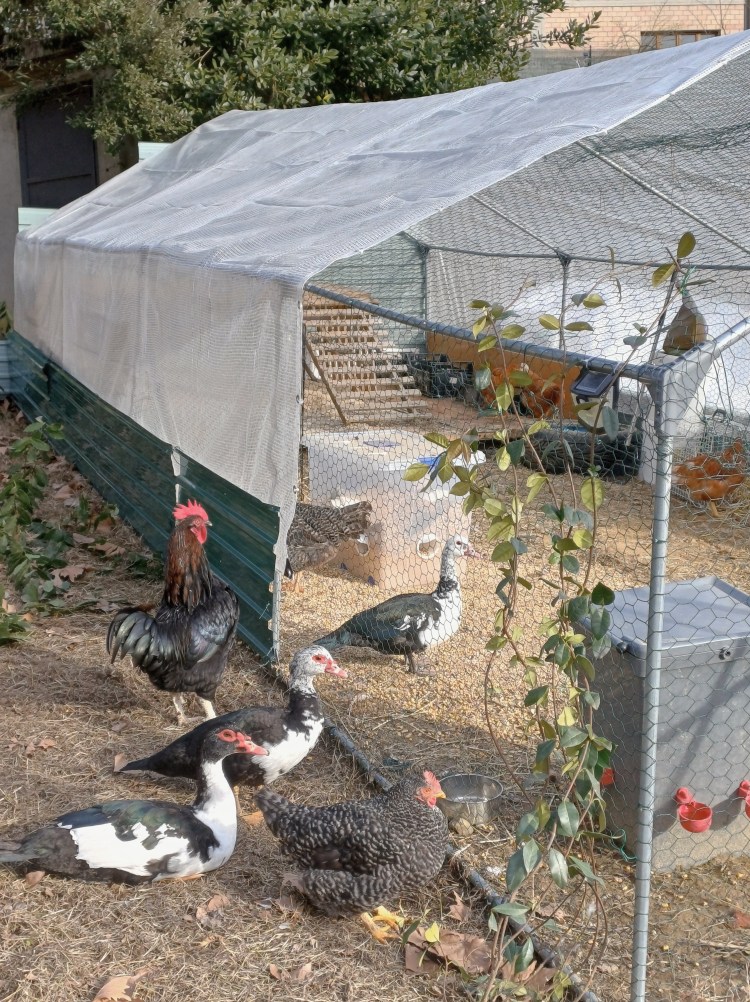
Ducks and chickens resting beside their coop at Genevieve Grove Bio Retreat, part of the small homestead ecosystem in the Tuscan countryside near Vinci.
What grows here often finds its way to the table.
Sometimes it is herbs. Sometimes greens. Sometimes very little at all.
That, too, is part of the rhythm.
Guests are welcome to walk among the beds, sit beneath the trees, or simply watch the animals move through the garden. Nothing is required. Presence is enough.
The garden offers a quiet reminder that nourishment is not only something we harvest.
It is something we participate in — with the land, with the animals, and with one another.
Il Giardino Vivente
“Una comunità è la condizione mentale e spirituale di sapere che un luogo è condiviso e che le persone che lo condividono definiscono e limitano le possibilità delle vite reciproche.” — Wendell Berry
Spring blossoms opening in the garden at Genevieve Grove, where pollinators and flowering trees mark the return of the growing season.
Ritornando a vivere in luoghi reali, riscopriamo cosa significa davvero comunità.
A Genevieve Grove, il giardino non è soltanto uno spazio dove crescono ortaggi. È un piccolo ecosistema vivente dove terra, piante, animali e persone condividono lo stesso luogo.
Le galline si muovono lentamente tra l’erba. Le anatre attraversano i margini dell’orto. I cani riposano all’ombra o seguono silenziosamente i sentieri.
Ogni vita qui influenza le altre.
Il giardino ricorda che la terra non appartiene mai a una sola specie. È sempre uno spazio condiviso di presenza, movimento e responsabilità.
Vivere con la terra
Quando la vita è radicata nel suolo, nel clima e nella cura quotidiana, gli effetti delle nostre azioni diventano visibili.
A small sign marking the vegetable garden at Genevieve Grove, where food is grown slowly and close to the land.
Ciò che piantiamo. Come coltiviamo. Ciò che prendiamo e ciò che restituiamo.
Ogni gesto lascia un segno nel tessuto vivente del luogo.
Qui cresce il cibo, ma cresce anche una relazione: tra le piante e il suolo, tra gli animali e gli insetti, tra l’acqua e le radici, tra gli esseri umani e i ritmi che sostengono la vita.
Le galline smuovono la terra e aiutano a mantenere l’equilibrio degli insetti. Le anatre si muovono tra il prato e i bordi dell’orto. La materia organica ritorna al suolo attraverso il compost e il naturale ciclo della decomposizione.
Nulla esiste isolato. Ogni elemento sostiene l’altro.
L’obiettivo non è il controllo, ma la coesistenza.
Un giardino che osserva
New growth emerging in the vegetable garden at Genevieve Grove, shaped by soil, light, and time.
Il giardino segue un principio semplice: osservare prima di intervenire.
Le aiuole nascono dove la luce arriva naturalmente. L’acqua viene guidata con delicatezza attraverso il terreno. Le piante che prosperano vengono accolte; quelle che faticano insegnano qualcosa sul suolo.
Stagione dopo stagione, il giardino si adatta.
Le foglie cadono e ritornano alla terra. La paglia protegge il suolo. Gli scarti della cucina diventano nutrimento.
La crescita non viene forzata. Viene accompagnata.
Il lavoro qui è lento, paziente e attento — una lunga conversazione con la terra piuttosto che un progetto imposto.
Una terra condivisa
Ducks and chickens resting beside their coop at Genevieve Grove Bio Retreat, part of the small homestead ecosystem in the Tuscan countryside near Vinci.
Ciò che cresce nel giardino spesso arriva sulla tavola.
A volte sono erbe. A volte verdure. A volte molto poco.
Anche questo fa parte del ritmo.
Gli ospiti possono camminare tra le aiuole, sedersi sotto gli alberi o semplicemente osservare gli animali che attraversano il giardino. Non è richiesta alcuna partecipazione. Basta essere presenti.
Il giardino offre un semplice promemoria: il nutrimento non è solo qualcosa che raccogliamo.
È qualcosa a cui partecipiamo — con la terra, con gli animali, e tra di noi.


 Genevieve Grove -Bio Retreat